




A CSPO certificate and three years of Jira administration used to read as a career. In 2026 it reads as exposure.
Marty Cagan keeps saying the quiet part out loud: the product owner is a role inside the delivery process. Not the product. The process. And delivery-process work is the first layer AI takes. Backlog grooming, ticket writing, sprint coordination, and requirement translation are exactly the tasks a capable agent does on a Tuesday afternoon while an engineer runs their own discovery next to it.
So the honest read has two exits. Move up into real product work, discovery, framing, and building. Or watch the middle you own get absorbed. This is not a threat post. It's a map of where the hours go next.
The skill that made you employable, turning decided requirements into a clean, sequenced board, is the same skill an agent reproduces in seconds. Optimizing that layer harder is optimizing the thing that's disappearing.
Why the PO goes before the PM
The product manager and the product owner were never the same job, even when one person held both titles. The PM decides what to build and why. The PO makes sure the decided work flows through a delivery system: stories written, acceptance criteria attached, sprints loaded, dependencies flagged.
That second job is a translation layer. It converts intent into tickets and keeps a board coherent. Translation is precisely what large models are good at. Feed an agent the decision, the context repo, and the definition of done, and it drafts the stories, sizes them, and sequences a sprint without a planning meeting.
Engineering makes it faster. Coding agents let engineers pull their own context and propose their own breakdowns, so the person who used to hand them tickets sits in the middle of a conversation that no longer needs a middle. The PM role survives because judgment about what to build does not automate. The PO role, defined by process throughput, does.
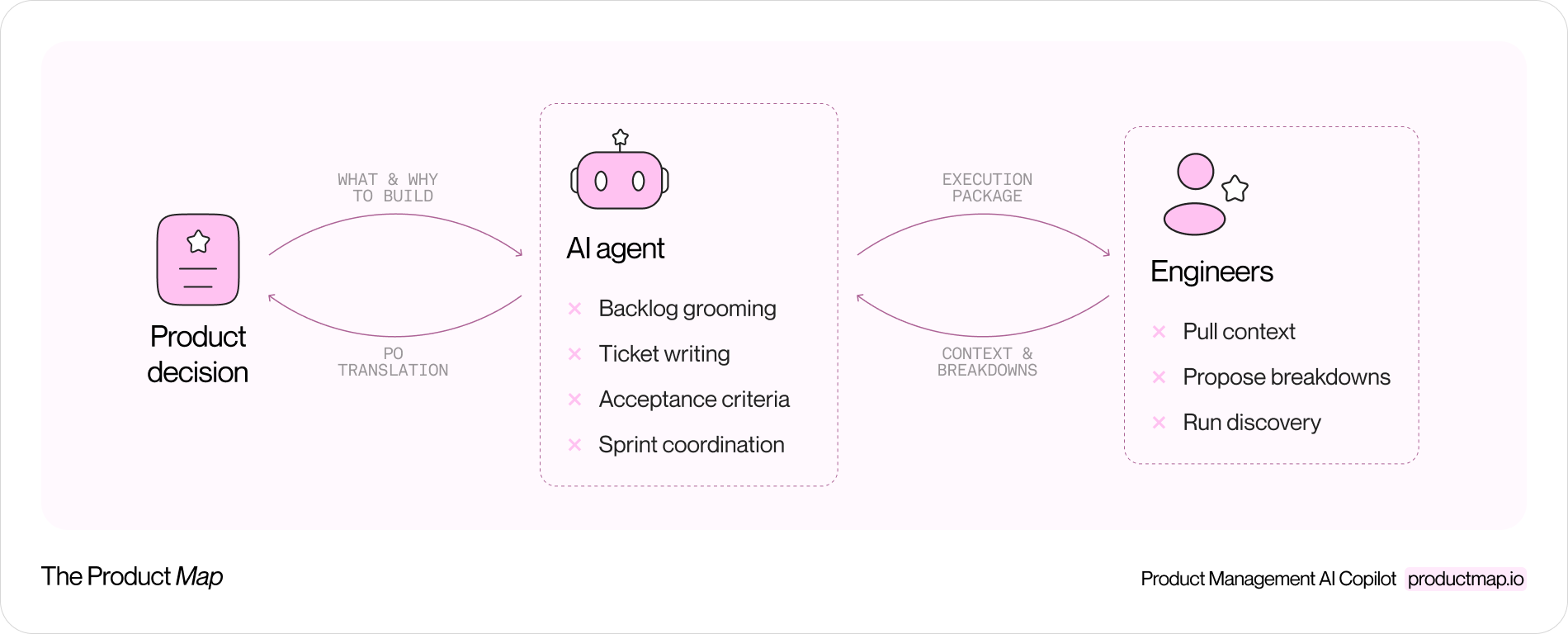
Four duties AI takes first
Name the work that used to fill a product owner's week. Each item on this list is now something a product team hands to an agent or skips entirely.
- Grooming the backlog: an agent reads the current backlog, clusters duplicates, flags stale items, and proposes a ranked cut against your strategy. You review the shortlist instead of running a two-hour refinement session.
- Writing tickets: given a decision and the acceptance criteria, an agent drafts the story, the edge cases, and the test notes in the format your team uses. The PO used to type this by hand.
- Coordinating the sprint: load, sequence, and dependency-check happen from the repo state, not from a human reconciling a board every morning.
- Translating requirements: engineers with their own agents read the PRD and the context directly. The interpreter role thins out.
None of this means the work vanishes. It means the work stops being a full-time seat. When four duties compress into a review pass, one person no longer owns the backlog as a job.
Jira mastery isn't the job
For a decade, fluency in Jira, Confluence, Asana, Trello, or whatever tracker the org bought was a real credential. You knew the workflow states, the automation rules, the board filters nobody else could configure. That knowledge got you hired and kept you useful.
It stopped being the point. Knowing a tracker deeply is now closer to knowing a specific email client deeply. Handy, not differentiating. The product owners who read this correctly are moving their attention off the tool and onto the product itself: what to build, for whom, and how to tell if it worked.
That shift has a name people avoid saying. It's the move from product owner to product manager. From owning a process to owning an outcome. The certification industry sold the first job as a destination. The market is now pricing it as a starting point.
Deep tracker fluency signals you can operate a system someone else designed. Product judgment signals you can decide what the system should produce. Only one of those keeps compounding in an AI-native team.
Scrum thinking survives, the tooling moves into Git
Drop the ceremonies and you lose something real. Short feedback loops, working software over documentation, and inspecting-and-adapting are still how good teams operate. The thinking behind Scrum holds up. What changed is the machinery underneath it.
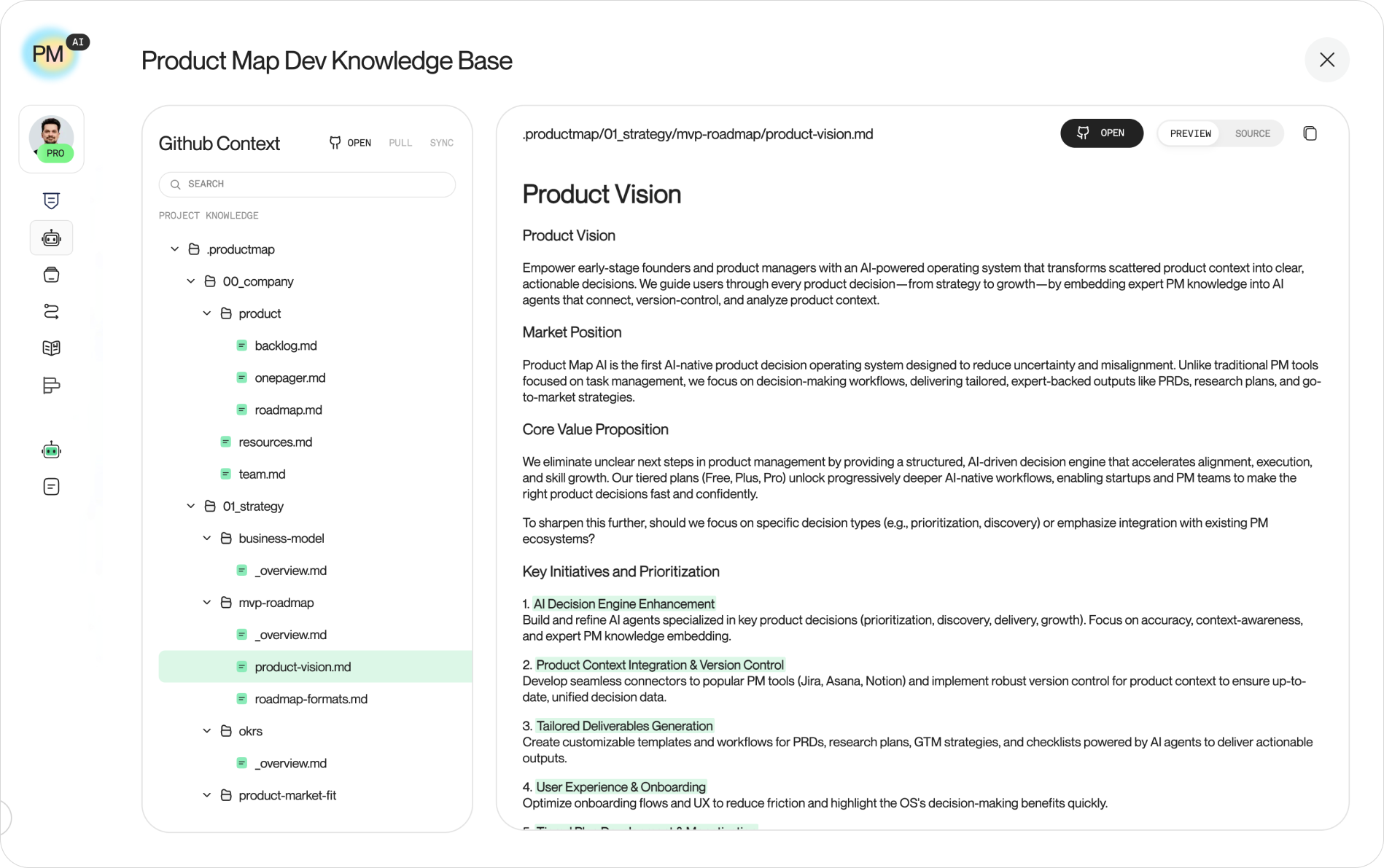
AI-native teams increasingly build their own internal tooling instead of renting a heavyweight tracker. The board is often Git. Product requirement documents live as Markdown files in a repository, versioned, diffed, and reviewed like code. A pull request is the refinement conversation. A commit history is the sprint log. The context repository that every agent already reads becomes the single place work is planned and recorded.
This is not tooling minimalism for its own sake. It's that agents read Git natively and read a proprietary tracker only through fragile integrations. Put the plan where the agents already work and the plan stays current without anyone syncing two systems. Iterative delivery keeps its shape. The Kanban column became a folder.
Where the work moves: let agents write and prioritize
The clearest signal of the shift is which tasks a product team now starts with an agent. Two of them used to define the product owner day.
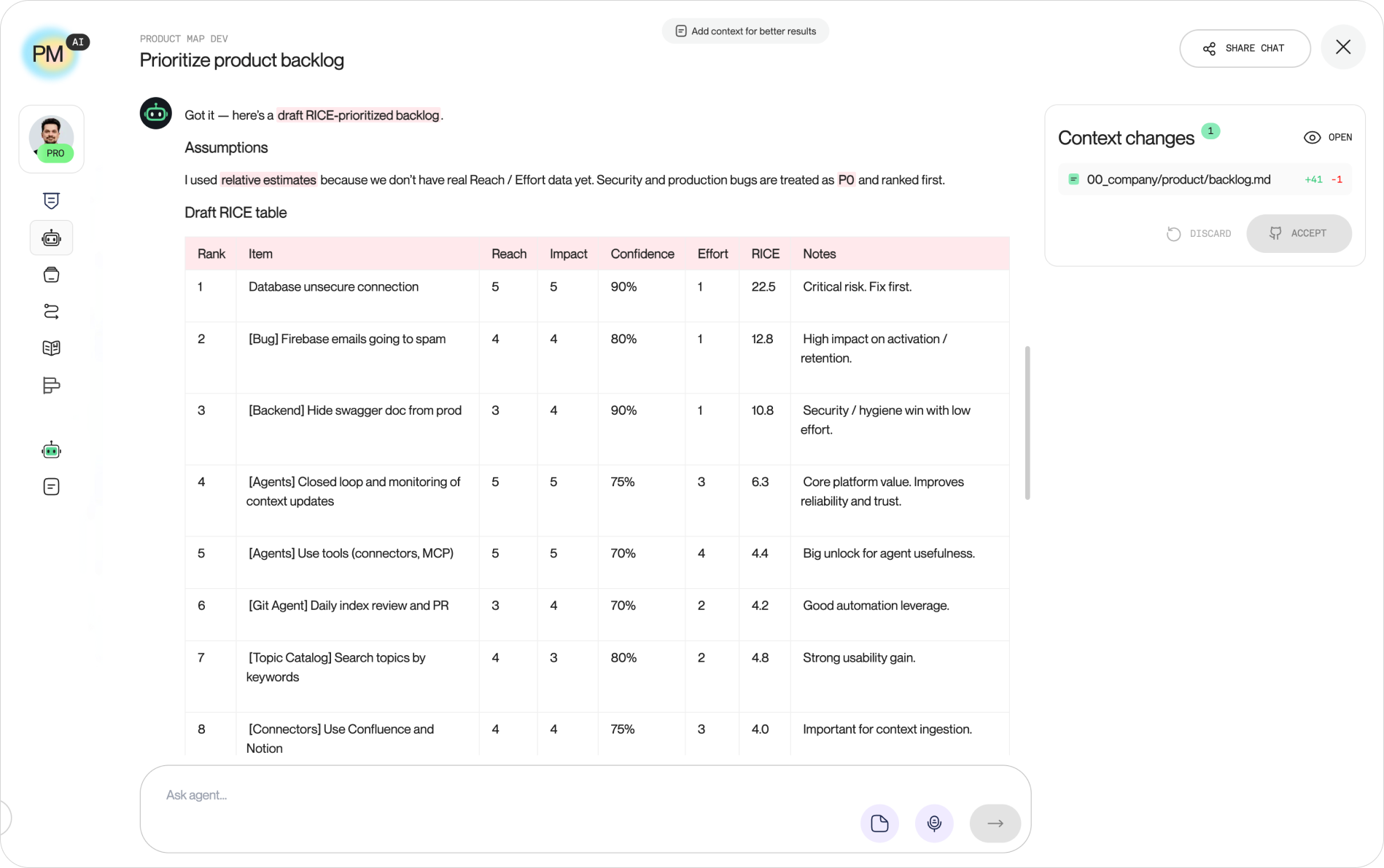
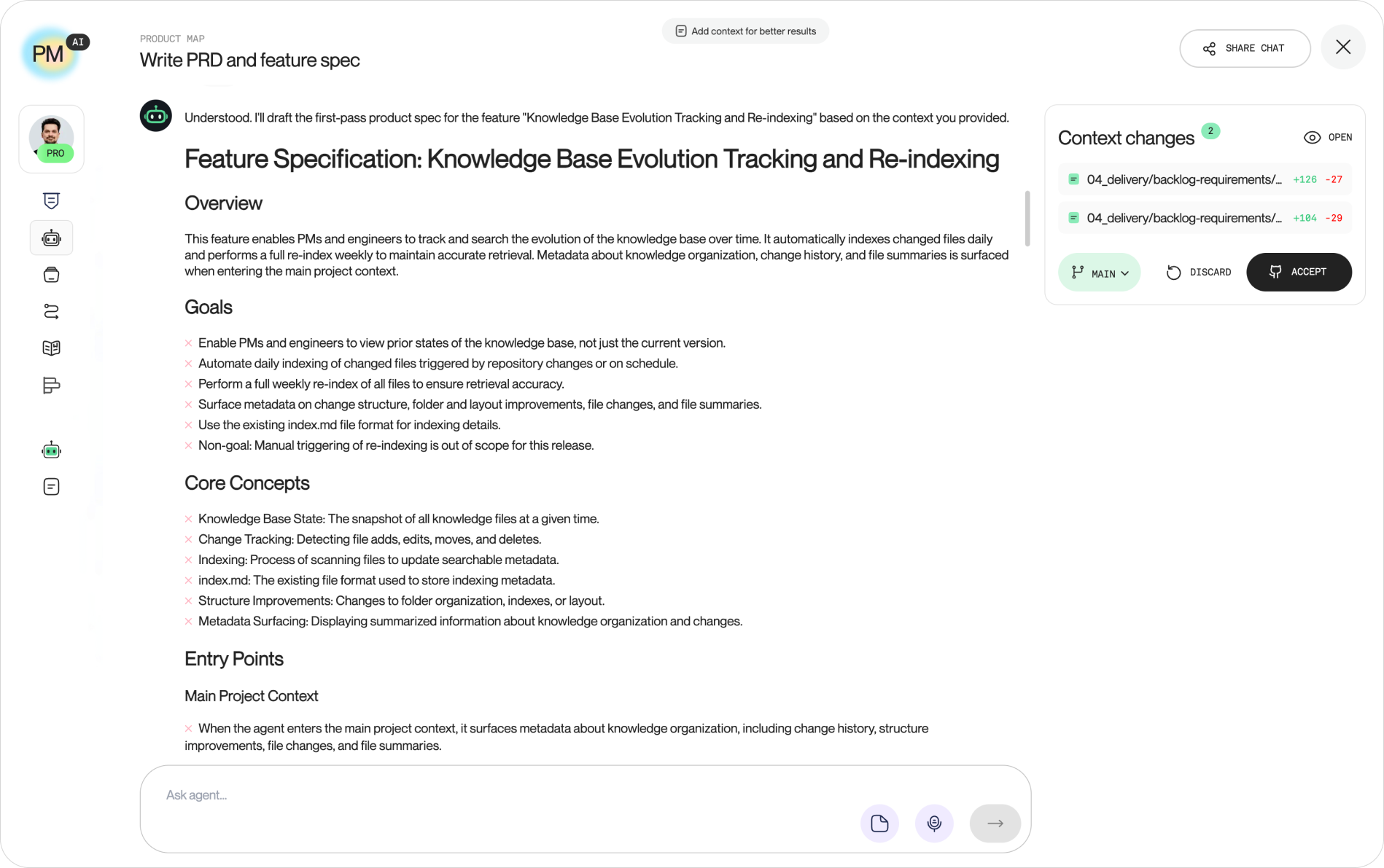
Writing the spec is the first. Instead of drafting a PRD in a doc and then re-typing it as tickets, you hand the decision to a PRD agent that produces the document, the acceptance criteria, and the story breakdown in one pass, grounded in your product context. You edit and approve. You don't transcribe.
Prioritizing the backlog is the second. The judgment stays yours, but the mechanical work of scoring, sequencing, and breaking stories into tasks moves to an agent. Product Map's backlog prioritization agent takes a set of backlog stories and returns them broken down and ranked into prioritized tasks, so you argue about the ranking instead of assembling it. Pair it with a clear prioritization method so the agent scores against a framework your team agreed on, not a black box.
What's left for the human is the part that was always the job: deciding the goal, judging the tradeoffs, and defending the call. The agent handles the assembly. You own the direction.
Turn delivery-process hours into real discovery skill
Here's the uncomfortable part most role-change pieces skip. Telling a certification-trained product owner to "go do discovery" ignores that discovery is a different muscle, and many POs have never been given room to build it. The delivery seat was designed to keep them out of the room where the what-to-build decisions happen.
So the transition is not a mindset change. It's a reallocation of hours. Every week an agent absorbs a grooming session or a ticket-writing block, redirect that time into work that builds judgment: talk to five users, sit in on sales calls, read your own product's failure logs, write the strategy memo nobody asked for. Do the discovery even before anyone assigns it to you.
The org-design question hangs over all of this, and it's the one leaders are not answering yet. When nobody owns the backlog full-time, who does it belong to? The likely shape is that discovery-capable PMs absorb the direction, engineers with agents absorb the breakdown, and the pure-process seat between them does not get backfilled. Cagan's read on this era is oddly optimistic: for people who can do genuine product work, the leverage has never been higher. The tools now do the parts you never wanted to do anyway.
Move up or move out isn't a warning. It's the two doors that are open while the wall between them comes down. Pick the one that puts you closer to the product.